
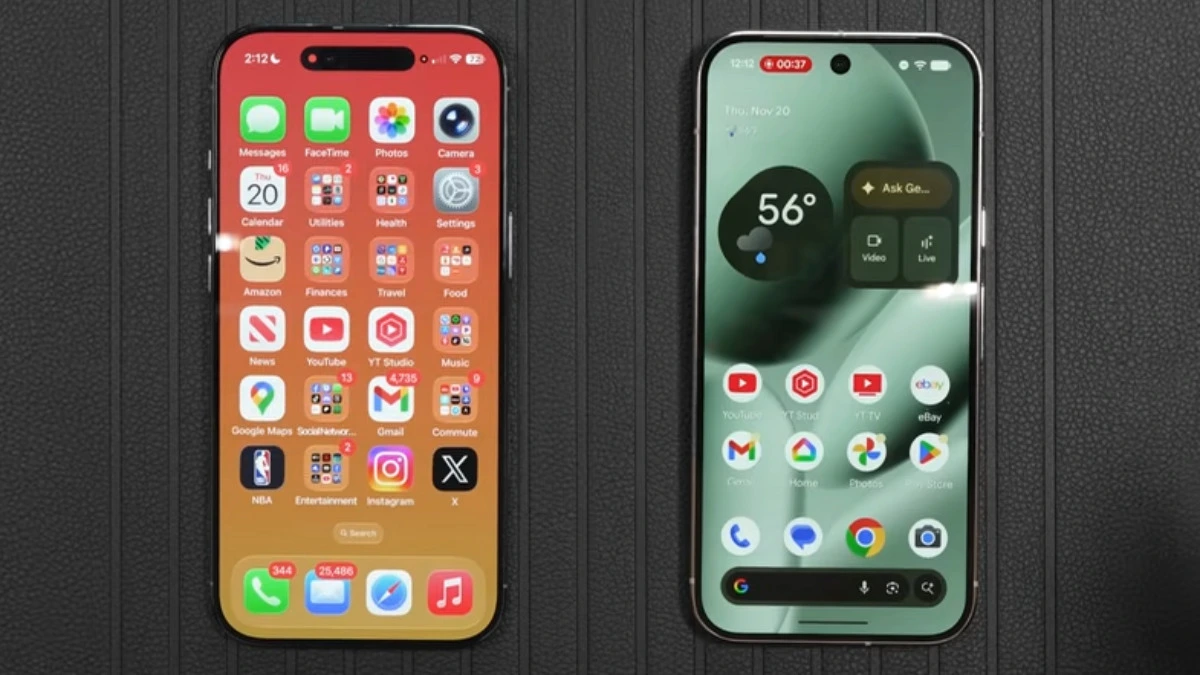
For nearly a decade, one feature has quietly reinforced Apple’s ecosystem dominance more than flashy hardware or sleek design: AirDrop. The ability to instantly send photos, videos, documents, and links between Apple devices—without cables, logins, or apps—has made iPhones, iPads, and Macs feel inseparable. For Android users, AirDrop has long been a symbol of what their platform lacked.
That gap may finally be closing.
Google is rolling out a new generation of its AirDrop-like sharing technology for Android, promising faster transfers, wider device compatibility, and a far more intuitive experience than anything it has offered before. The announcement has sparked a major question across the tech world: Is Apple willing—or even able—to coexist with it?
Why This Matters for Everyday Users
As someone who regularly works across Android phones, Windows laptops, and cloud-based collaboration tools, I’ve personally faced how inefficient cross-platform file sharing can be. Simple tasks like sending screenshots, design files, or documents often require workarounds such as email or cloud uploads.
This is why Google’s renewed focus on fast, device-to-device sharing is more than a feature update—it directly addresses a real productivity gap that many users experience daily.
Why AirDrop Became Apple’s Quiet Superpower
AirDrop isn’t just a convenience feature—it’s a strategic advantage. By making file sharing effortless within its ecosystem, Apple subtly encourages users to stay all-in. An iPhone works best with a Mac. An iPad feels incomplete without AirDrop. Once users experience that frictionless flow, switching platforms feels like a downgrade.
Technically, AirDrop works by combining Bluetooth for device discovery with peer-to-peer Wi-Fi for high-speed transfers. On newer devices, Apple also uses ultra-wideband chips for precise proximity detection. Everything is encrypted, local, and fast.
For years, Android lacked a direct equivalent that felt just as smooth.
Android’s Past Attempts Fell Short
Google has tried before. Android Beam, introduced in the early 2010s, relied on NFC. Devices had to be physically tapped together, transfers were slow, and support was inconsistent. It felt more like a tech demo than a daily-use tool.
Nearby Share, launched later, was a major improvement. It allowed wireless transfers using Bluetooth and Wi-Fi, but it suffered from several limitations:
- Confusing setup options
- Inconsistent device detection
- Low user awareness
- Uneven manufacturer support
While functional, it never achieved the “it just works” reputation that AirDrop enjoys.
Google clearly learned from those shortcomings.
What’s Different About Google’s New Sharing Technology?
Based on Google’s recent Android platform updates and public statements, the new sharing system builds on Bluetooth discovery and Wi-Fi Direct for faster local transfers. However, its real-world reliability and adoption will become clearer after wider public rollout.
Google’s latest approach is not just an update—it’s a rethink.
The new system uses Bluetooth for instant discovery and Wi-Fi Direct for fast, high-bandwidth transfers. The user experience is intentionally minimal: tap “share,” see nearby devices, select one, and the transfer begins. No apps to install. No cables. No cloud uploads.
More importantly, this system is designed to work across phones, tablets, Chromebooks, and Windows PCs, signaling Google’s broader vision of a connected, multi-platform ecosystem.
Google has also emphasized security. Transfers are end-to-end encrypted, device-to-device, and never pass through external servers. For privacy-conscious users, this is a crucial promise—but one that will need real-world validation.
Why Cross-Platform Sharing Matters More Than Ever
The tech world has changed since AirDrop first launched.
Households now mix Android phones, iPhones, Windows laptops, Macs, and Chromebooks. Workplaces rely on diverse hardware ecosystems. Students collaborate across platforms daily. In this environment, closed systems create friction, not loyalty.
Quick file sharing is no longer a luxury—it’s a productivity requirement.
Governments, especially in Europe, are also applying pressure. Regulators increasingly view closed ecosystems as anti-competitive, pushing major tech companies toward greater interoperability. Users want convenience without being forced into a single brand.
Google’s move reflects this reality.
Apple’s Dilemma: Openness vs. Control
For Apple, the situation is complicated.
AirDrop, iMessage, and FaceTime are not just features—they are retention tools. Opening them up would weaken Apple’s ecosystem lock-in, potentially reducing iPhone loyalty and long-term revenue.
From a business perspective, resistance makes sense.
From a user perspective, it feels outdated.
To allow compatibility with Android’s new sharing system, Apple would need to expose parts of AirDrop’s protocols or create open APIs. Historically, Apple has shown little interest in doing either.
Apple’s official stance has always been privacy-first. Opening device-to-device communication to external platforms increases risk, complexity, and attack surfaces. Apple prefers closed systems precisely because they are easier to secure and control.
Privacy and Security: The Core Tension
Both Apple and Google position privacy as a core principle of their ecosystems. Apple has repeatedly emphasized closed-system security in its public documentation, while Google states that its sharing technology uses encrypted, device-to-device transfers without routing files through external servers. Independent testing and long-term usage will ultimately determine how these approaches compare in practice.
Security may be Apple’s strongest justification for staying closed.
Apple tightly controls hardware, software, and networking standards. Every AirDrop interaction is encrypted, localized, and audited under Apple’s security framework. Opening that system—even partially—introduces uncertainty.
Google claims full encryption for its sharing tool, but Apple will likely wait for extensive real-world testing before trusting any cross-platform implementation. History shows Apple moves slowly when security is involved—and almost never compromises.
That said, closed systems are not immune to vulnerabilities either. Transparency and standardization can sometimes improve security rather than weaken it.
Possible Outcomes: What Happens Next?
The following scenarios are based on industry trends, regulatory discussions, and past behavior from both companies, rather than official confirmations.
There are several realistic scenarios.
1. Apple Refuses to Participate
This is the most likely outcome. Apple keeps AirDrop exclusive, while Google builds momentum within the Android and Windows ecosystems. Users adapt, but cross-platform friction remains.
2. Partial Compatibility
Apple could allow limited interaction through third-party apps or controlled APIs, offering basic functionality without full AirDrop integration.
3. Competitive One-Upmanship
Rather than opening AirDrop, Apple may enhance it—faster speeds, better UI, deeper integration—to reinforce its advantage.
4. Regulatory Pressure Forces Change
In certain regions, especially the EU, Apple may be required to allow more interoperability, even if it resists globally.
Global Impact: Why This Matters Outside the U.S.
In Asia, Africa, and much of Europe, Android dominates smartphone usage. A fast, reliable sharing system across Android and Windows devices could dramatically improve everyday workflows in these markets.
Students, small businesses, and remote workers stand to benefit the most. Less reliance on cloud uploads means faster sharing, lower data usage, and improved privacy.
Even if Apple stays out, Google’s system could become the default standard across much of the world.
In regions where Android and Windows dominate, local file-sharing tools can reduce reliance on cloud storage, lower mobile data costs, and improve productivity in low-bandwidth environments. This practical benefit may matter more to users than ecosystem loyalty alone.
A Shift Away From Platform Wars?
The broader trend is clear: users want technology that works together, not against itself. Platform wars feel increasingly out of touch with real-world needs.
Google’s new AirDrop-like feature represents more than convenience—it signals a push toward cooperative, user-first design. Whether Apple joins that vision or continues to stand apart will shape its public perception in the years ahead.
Final Verdict
Google’s updated sharing technology directly addresses long-standing frustrations around cross-platform file transfers. While it challenges Apple’s ecosystem advantage, it does not automatically force Apple to open AirDrop.
Historically, Apple adapts interoperability under strong market or regulatory pressure. Until then, Google’s solution may become the default across Android, Windows, and ChromeOS—particularly outside the U.S.
Regardless of Apple’s response, the broader shift toward seamless, user-first connectivity is already underway.
Google’s new sharing technology is a meaningful leap forward for Android and cross-device connectivity. It closes a long-standing gap, challenges Apple’s ecosystem advantage, and responds directly to how people actually use technology today.
Will Apple allow it? History suggests no.
But innovation has a way of forcing change.
Whether through competition, regulation, or evolving user expectations, the future is moving toward fewer barriers and better cooperation. Even if Apple keeps its walls intact, Google’s move pushes the entire industry forward—and that progress benefits everyone.
3 thoughts on “Airdrop for Android? Google’s New Sharing Tech Raises Big Apple Questions”