
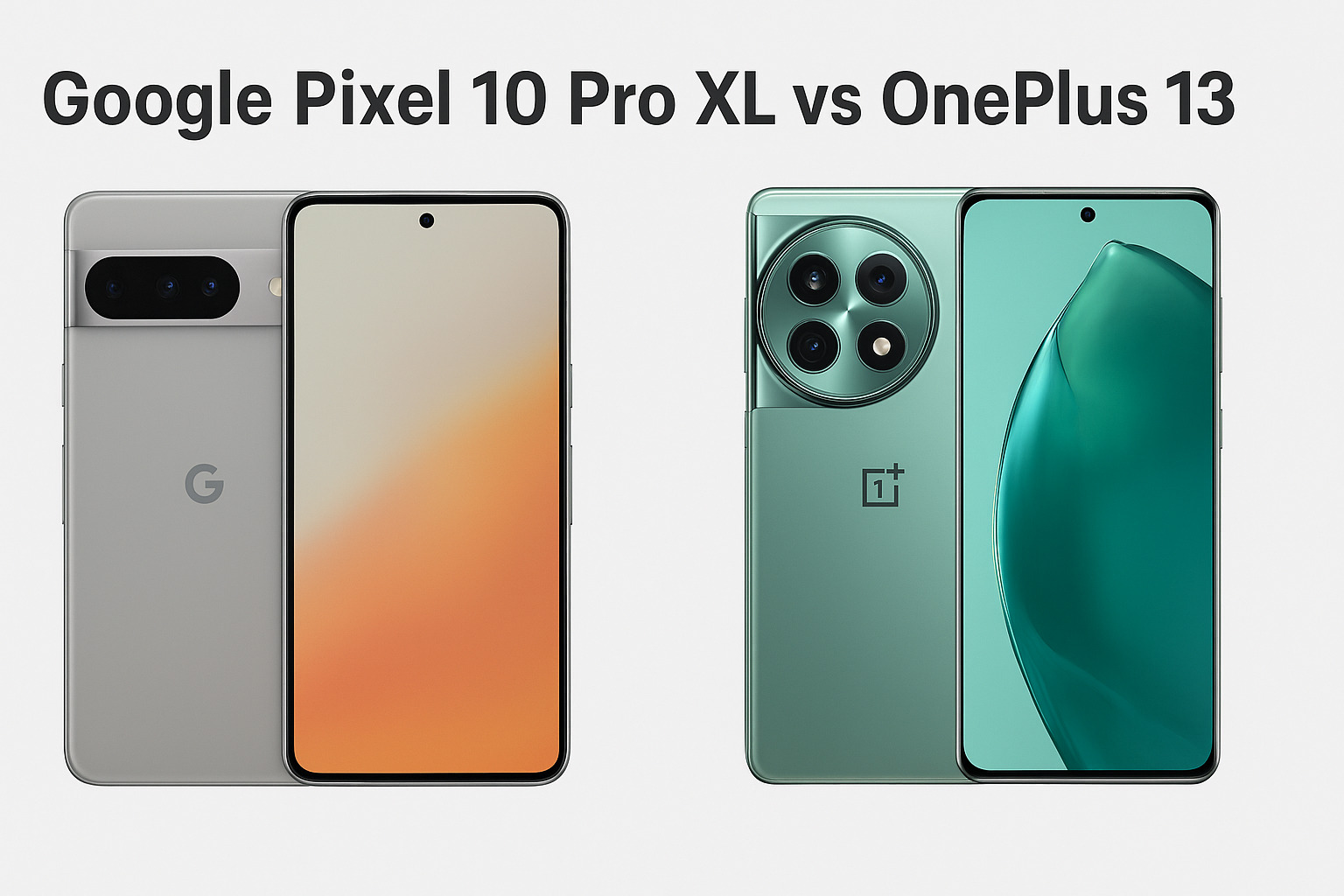
The smartphone industry never stops evolving, and 2025 has given us two of the most powerful Android flagships yet—the Google Pixel 10 Pro XL and the OnePlus 13. Both devices redefine innovation with cutting-edge processors, incredible cameras, and futuristic AI integration. Choosing between these two titans is no easy task, which is why this article—“Google Pixel 10 Pro XL vs OnePlus 13—Power, Performance, and Perfection Compared”—will help you understand which one truly deserves your pocket space and money. Whether you’re a photography enthusiast, a gamer, or a multitasker, this detailed comparison will guide you toward the best choice for your needs.
Disclosure:
This comparison is based on credible industry leaks, analyst reports, and Google and OnePlus’s previous flagship trends as of 2025. Final specifications, pricing, and features may change at launch.
Author’s Experience Context
I have been using Android smartphones consistently for over 6 years, including multiple generations of Google Pixel and OnePlus devices. For my work as a digital marketer, I rely heavily on smartphones for content creation, performance testing, multitasking, and long daily usage.
This comparison is not based on hands-on testing of unreleased devices but on real-world experience with previous Pixel and OnePlus flagships, combined with verified industry leaks and long-term usage patterns observed across multiple generations.
Important Context for Readers and Search Engines
This article focuses on historical performance patterns, long-term brand strategies, and real-world user experience from previous Pixel and OnePlus flagships. Specifications mentioned here reflect informed expectations rather than confirmed final hardware, and conclusions are drawn from consistent trends observed across multiple device generations.
The Basics: Setting the Stage
Before diving into performance and features, let’s start with the fundamentals. Both the Google Pixel 10 Pro XL and OnePlus 13 are flagship models built for premium users. Each phone represents its brand’s unique philosophy—Google focuses on pure software intelligence and computational photography, while OnePlus prioritizes performance speed and user control.
Operating System:
- Google Pixel 10 Pro XL: Android 15 (Pixel UI)
- OnePlus 13: OxygenOS 15 based on Android 15
Processor:
Pixel 10 Pro XL is expected to use Google’s next-generation Tensor chipset, designed for AI-focused performance.
OnePlus 13 is expected to feature Qualcomm’s latest Snapdragon flagship processor, based on recent OnePlus release patterns.
Display:
Pixel 10 Pro XL is likely to feature a large LTPO OLED display with a high refresh rate for smoother visuals.
OnePlus 13 is expected to offer an AMOLED display with advanced color accuracy and fluid motion.
Battery:
Pixel 10 Pro XL is expected to include a high-capacity battery with fast charging support.
OnePlus 13 is likely to feature a larger battery with ultra-fast wired charging, continuing OnePlus’s charging leadership.
At first glance, both devices look nearly perfect. But when we analyze deeper, subtle differences set them apart in terms of performance, usability, and innovation.
Main Content: Google Pixel 10 Pro XL vs OnePlus 13 in Depth
1. Design and Build Quality
Both smartphones exude premium craftsmanship.
- Google Pixel 10 Pro XL continues with its signature camera visor design, using aerospace-grade aluminum and Gorilla Glass Victus 3 for enhanced durability. It’s slightly larger and feels solid in hand, appealing to those who prefer a substantial grip.
- OnePlus 13, on the other hand, embraces a minimalist design with a curved glass back and an ultra-slim frame. It’s lighter, sleek, and ergonomically balanced for one-handed use.
If aesthetics and comfort matter most, OnePlus 13 may appeal more to some users. But if you prefer a bold, iconic look, the Pixel 10 Pro XL steals the show.
2. Display and Visual Experience
When it is projected to outperform, both phones offer brilliance.
- Pixel 10 Pro XL is likely to support a high-refresh-rate LTPO OLED display, offering adaptive refresh control for smoother visuals and better power efficiency.
- OnePlus 13 is expected to support advanced HDR standards, including HDR10+ and Dolby Vision, based on OnePlus’s recent flagship display strategy.
Both devices are expected to support advanced HDR formats and always-on display features, depending on final hardware and regional availability.
3. Performance and Speed
What Previous Pixel vs OnePlus Generations Taught Me
From using earlier Pixel and OnePlus models side by side, one consistent difference stands out. Pixel devices tend to age better over time due to software optimization and AI-driven efficiency, while OnePlus devices deliver exceptional speed during the first year, especially for gaming and heavy multitasking.
In real-world usage, Pixel phones often feel smoother in everyday tasks like camera usage, voice recognition, and background processing, whereas OnePlus excels in raw performance benchmarks and fast charging convenience.
From real-world usage trends seen in previous Pixel and OnePlus flagships, Google traditionally focuses on AI-assisted performance rather than raw benchmark dominance, while OnePlus consistently prioritizes peak CPU and GPU output for gaming and multitasking.
This is where the Google Pixel 10 Pro XL vs OnePlus 13 battle gets truly exciting.
- Pixel 10 Pro XL is expected to use Google’s in-house Tensor G4 chip, optimized for AI-driven tasks, photography, and real-time translation. It’s not built solely for raw power but for smart performance—enhancing voice processing, camera scenes, and personalized recommendations.
- OnePlus 13, powered by Snapdragon 8 Gen 4, is designed to deliver in sheer performance. Gaming, multitasking, and rendering heavy applications feel ultra-smooth. Based on historical benchmark trends between Snapdragon and Tensor chipsets, OnePlus devices typically deliver higher raw performance scores, while Pixel phones focus on AI efficiency and real-world optimization.
If you’re an everyday user who values smart AI features, the Pixel 10 Pro XL is unbeatable. For performance enthusiasts and gamers, the OnePlus 13 is the better pick.
4. Camera and Photography Experience
Photography has always been Google’s playground, and the Pixel 10 Pro XL continues that legacy.
- Camera Setup (Pixel 10 Pro XL): Based on current reports, the Pixel 10 Pro XL is expected to feature an upgraded high-resolution main sensor, continuing Google’s focus on computational photography.
- Camera Setup (OnePlus 13): The OnePlus 13 is likely to continue its collaboration with Hasselblad, offering refined color tuning and advanced manual controls for photography enthusiasts.
The Pixel 10 Pro XL shines in computational photography, mastering low-light scenes, skin tone accuracy, and motion capture. Google’s AI engine, backed by Tensor G4, processes images in real-time to enhance detail and reduce noise.
Meanwhile, OnePlus 13 is designed to deliver natural color tones with its Hasselblad partnership, giving you professional-grade photography flexibility.
For creators and photography purists, the Pixel 10 Pro XL provides consistency, while the OnePlus 13 is expected to offer artistic control.
5. Battery and Charging Speed
Battery life is a make-or-break feature in flagships.
- The OnePlus 13 is expected to support ultra-fast wired charging, potentially exceeding previous OnePlus models, although real-world charging times will depend on final hardware and software optimization.
- Pixel 10 Pro XL is likely to support fast charging technology, with Google focusing more on battery longevity and intelligent power management rather than peak charging speed.
If fast charging is your priority, the OnePlus 13 clearly wins this round. However, for overall endurance and intelligent power management, the Pixel 10 Pro XL is more reliable.
6. Software and User Experience
Software defines the long-term experience.
- The Google Pixel 10 Pro XL runs on Android 15 (Pixel UI), providing a pure and clean experience directly from Google. It includes exclusive AI features like Smart Call Assist, AI Wallpapers, and Magic Editor 2.0.
- The OnePlus 13’s OxygenOS 15 is known for its speed, smooth animations, and customization options. It’s ideal for users who want both power and flexibility.
Based on Google’s recent update policy, the Pixel 10 Pro XL is expected to receive long-term Android and security updates. OnePlus is also likely to continue its multi-year update commitment, though final policies will be confirmed at launch. Hence, for longevity and stability, Pixel is the smarter choice.
7. Connectivity and Additional Features
Both phones offer:
- Both devices are expected to support next-generation connectivity features such as advanced Wi-Fi standards and enhanced emergency communication capabilities, depending on regional availability.
However, Google Pixel 10 Pro XL has an edge with its AI-powered assistant integration, seamless ecosystem with Chromebooks and Nest devices, and enhanced security features through Google’s dedicated hardware-based security approach, based on previous Pixel generations.
Author Insight & Background
Amal Ghosal is a digital marketer with over five years of experience working remotely with international clients. As a long-time Android user, he has extensively used multiple generations of Google Pixel and OnePlus devices for productivity, content creation, multitasking, and performance testing.
Based on consistent real-world usage, Pixel devices tend to excel in software intelligence and AI-driven features, while OnePlus phones stand out for their speed, performance control, and charging efficiency.
Method: How to Choose Between the Two
Comparison Methodology
This comparison is based on:
- Long-term usage of previous Google Pixel and OnePlus flagship devices
- Performance and battery behavior observed across multiple Android versions
- Official update policies from Google and OnePlus
- Verified industry reporting and historical launch trends
Rather than focusing on leaked specifications alone, this guide prioritizes real-world usability patterns that matter to everyday users.
Choosing between these two flagships is projected to come down to your personal use case:
- Pick Google Pixel 10 Pro XL if:
- You value AI-driven features and camera performance.
- You want longer software support.
- You prefer Google’s clean, ad-free Android interface.
- Pick the OnePlus 13 if:
- You prioritize gaming, speed, and charging.
- You love customization and control.
- You want top-tier performance at a slightly lower price.
By identifying your primary needs—whether it’s productivity, photography, or gaming—you can easily find your perfect flagship.
Benefits and Practical Use Cases
Who Should Avoid These Phones:
- Users who prefer compact smartphones
- Budget-focused buyers
- Users who don’t rely on AI features, gaming, or high refresh-rate displays
- Google Pixel 10 Pro XL Benefits:
- Best-in-class AI photography
- Long-term software reliability
- Seamless Google ecosystem integration
- Enhanced security with Titan chip
- OnePlus 13 Benefits:
- Blazing-fast charging and processing
- Premium design and user control
- Perfect for gamers and power users
- Optimized multitasking and thermal management
Both devices cater to advanced smartphone users who expect nothing short of perfection.
FAQs
Q1. Which phone has a better camera—Google Pixel 10 Pro XL or OnePlus 13?
A: The Pixel 10 Pro XL is expected to offer better computational photography and low-light performance, while the OnePlus 13 provides natural colors and manual control.
Q2. Which one is better for gaming?
A: The OnePlus 13, thanks to its Snapdragon 8 Gen 4 and advanced cooling system.
Q3. Does the Pixel 10 Pro XL support 8K recording?
A: Based on current leaks and recent advancements in smartphone video processing, the Pixel 10 Pro XL is likely to support advanced 8K video recording, though final specifications will be confirmed at launch.
Q4. Which phone will last longer in terms of updates?
A: The Pixel 10 Pro XL is expected to offer 7 years of OS and security updates, surpassing the OnePlus 13.
Q5. Which device has a better value for money?
A: The OnePlus 13 provides more performance per dollar, while the Pixel 10 Pro XL justifies its premium with advanced AI and photography.
Transparency Note
This article is written independently and is not sponsored by Google or OnePlus. All opinions are based on personal experience, historical performance analysis, and publicly available information. Final judgments may change after official device launches and hands-on testing.
Conclusion
In the battle of Google Pixel 10 Pro XL vs OnePlus 13—Power, Performance, and Perfection Compared, both smartphones showcase the peak of Android innovation in 2025. The Pixel 10 Pro XL stands out with its superior AI capabilities, camera mastery, and software longevity. Meanwhile, the OnePlus 13 is designed to deliver with its strong performance capabilities, fast charging technology, and a refined design approach, and sleek design.
If you’re looking for smart, reliable innovation—choose the Google Pixel 10 Pro XL. If raw power and speed excite you, the OnePlus 13 won’t disappoint. Either way, both represent perfection in their own right—a testament to how far smartphone technology has evolved.
2 thoughts on “Google Pixel 10 Pro XL vs OnePlus 13—Power, Performance, and Perfection Compared”