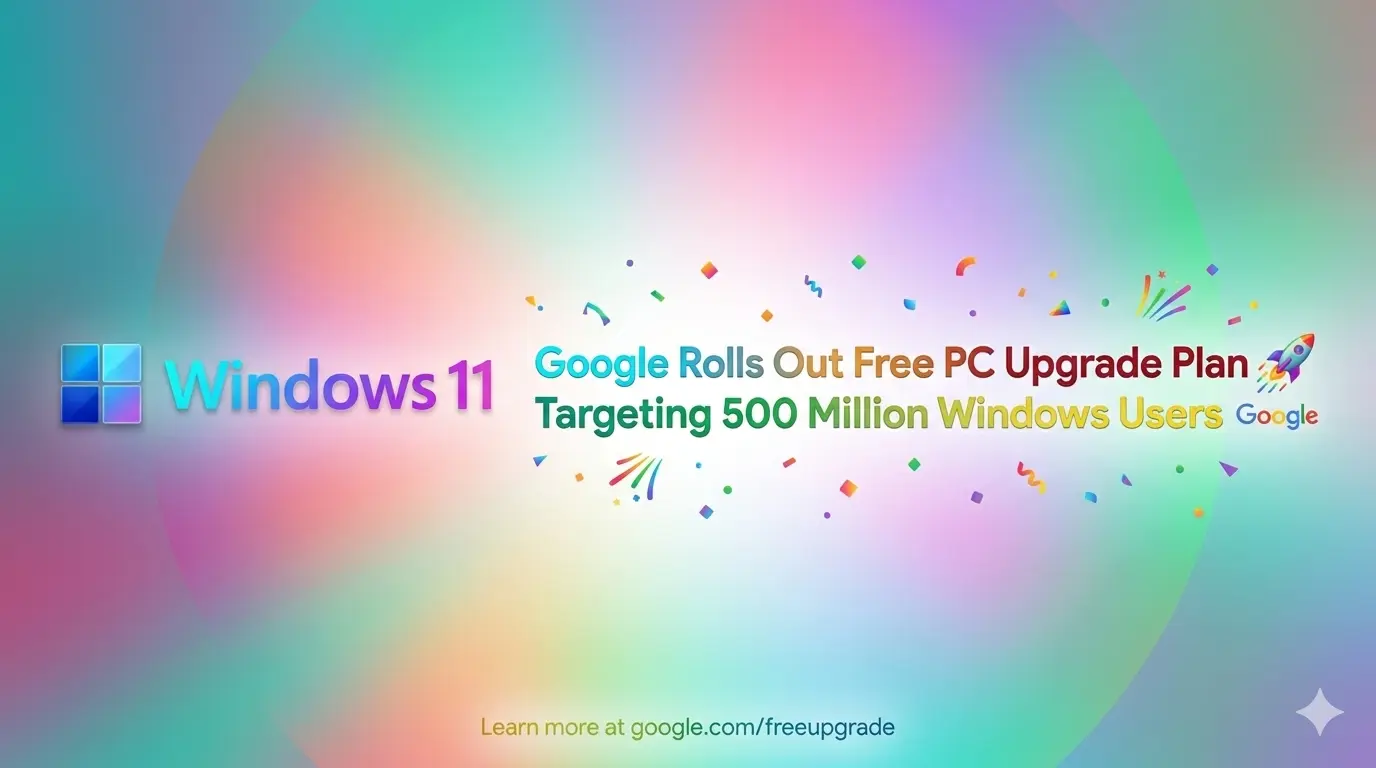
More than 500 million Windows 10 PC users are unable to upgrade to Windows 11 and are now at risk of a security nightmare. Something needs to change. Google says it has a solution and has confirmed a free PC upgrade for all of these users. And it’s available now.
You can turn your old, unsupported laptop into a fast, secure, and durable machine for free. The offer is to “upgrade” your PC to ChromeOS Flex. Refresh your devices for free with a modern, cloud-based operating system that’s secure and easy to manage. While the offer has been available for a while, it’s now easier than ever to take advantage of it. Google announced today, “A new ChromeOS Flex USB kit is available starting today.” Their new partnership with Back Market will “help you modernize your PC or Mac by installing our fast, secure, and free operating system.”
Microsoft’s decision to end support for Windows 10 last October “left many with a difficult decision: spend hundreds of dollars on a new device, or continue using an insecure, older device.” With Windows 11’s slow adoption, more Windows users than ever before were using a retired operating system.
Microsoft is offering a free Extended Support Update (ESU) program for any Windows 10 user, though it’s only until October of this year. After that, you’ll be out of support unless you work for an organization that has an enterprise plan.
Google says, “This physical kit costs about $3 or €3, is recyclable, and our partnership with Closing the Loop further reduces e-waste.” While the ChromeOS Flex “upgrade” is free, the USB kit is not.
Securing hundreds of millions of devices is also a key consideration here. The fear of hundreds of millions of PCs becoming useless has made headlines, as various waste agencies calculate the impact on landfills.
ChromeOS uses an average of 19% less energy than other comparable systems. “The manufacturing process of a new laptop is responsible for a large portion of its carbon footprint,” Google says. “ChromeOS Flex gives you the opportunity to use your existing device for longer, keeping hardware out of the landfill and helping to avoid the pollution caused by making new devices.
Even if you buy a new machine, you can still upgrade your old one, perhaps for a younger family member. Whether it’s time to move from Windows to Chrome is a controversial decision, to say the least. The situation is quite precarious for Windows 10 users whose PCs can’t run Windows 11. This is at least a solution.
That could change, as Microsoft is forcibly upgrading PCs running older versions of Windows 11 to the latest version, ensuring a level playing field in terms of security. The company is using AI to assess when PCs are ready for the upgrade and automatically apply the upgrade. While it could have done the same for Windows 10 PCs that are eligible for Windows 11, it hasn’t been done so far. Come October, and support will truly end.
Just as Google has begun to widely promote this free PC upgrade, Microsoft has inadvertently shown why die-hard Windows 10 fans are so reluctant to upgrade.
Two headlines from the specialist website Neowin sum up the whole story. “Microsoft admits its latest ‘update’ broke Windows 11’s crucial Start menu function”—just hours after the news broke, the Windows maker stated that there are no known issues with Windows 11.”
The second of these stories is the one Microsoft will want to promote the most, as it wants to keep the Windows 10 ecosystem to itself. It doesn’t want users to flock to Google’s new, cloud-based environment.
“According to Microsoft, there are currently no unresolved issues or bugs in Windows 11. No, this is not blatant clickbait. The official documentation, where Microsoft keeps track of unresolved bugs and known issues, lists all issues as resolved.”
As the site notes, “Fixing all known bugs is a significant change for the current version of Windows 11.” Since its release in late 2024, “Microsoft has been steadily addressing (the issues), eliminating known bugs one by one.”
And Inc. notes, “Microsoft had envisioned a smoother transition and aimed to emulate the relatively rapid change from Windows 7 to Windows 10.” What was supposed to be a modernization upgrade has instead proven to be exclusionary.”
Then came Google and its tempting new offer, aimed at users who are willing to upgrade to Windows 11.
“A version of Windows 10 released a decade ago is now eligible for additional security patches.” “Windows 10 is dead, but its enterprise version is still alive.” This is an example of what can be done to keep Windows alive through long-term patches. This could be even more effective if we face another situation in October where millions of users will lose support.
In short, Microsoft officially ended mainstream support for Windows 10 on October 14, 2025, but the situation is getting more complicated. Consumers can enroll in the Extended Security Updates (ESU) program to receive additional security patches, and this option is now being extended to select enterprise customers. At this rate, Windows 10 will continue to receive updates for a much longer period of time than any previous Windows version.
The good news? Microsoft says that it is giving extra time “as support for Windows products first released in 2016 nears the end of their support period.” Windows 10 IoT Enterprise 2016 LTSB and Windows Server 2016 will be affected. “If your organization is still using the products listed above, your devices will receive one last monthly security update (in October). After that, these devices will no longer receive any Windows security updates, non-security updates, bug fixes, technical support, or online technical content updates. If you need more time, you can use the Extended Security Updates (ESU) program.”
In their messaging center, Microsoft describes this as a “temporary solution” that is available now. Extended Security Updates (ESU) can now be purchased through volume licensing or through Microsoft Cloud Solution Providers (CSPs).
For home users, the next few months will be quite interesting. Microsoft has made it clear that ESU is only an offer for 12 months. However, if Windows 10 can continue to be patched, it will continue to be. It remains to be seen what exactly will happen as October 2026 approaches, when the warnings from last year’s deadline begin to repeat themselves. There are plenty of reports and blogs advising users to switch to Linux, and now Google is also promoting a different, more general user-friendly option. Those 500 million Windows 10 users have now become the focus of the discussion.