
The Caspian, An Overlooked Travel Gem Between Europe and Asia
The Caspian Sea is the world’s largest inland body of water, located between Europe and Asia. Despite bordering five countries, it remains one of the least-visited travel destinations. This guide explores why the Sea is still overlooked—and why it may be one of the most rewarding places to visit today.
From the modernist waterfront of Baku via Iran’s green coastal villages to the wide, empty shores of Kazakhstan, the Sea offers something rare in today’s travel world: space, authenticity, and stories untouched by mass tourism. The five countries that share their coastline bring their own culture, cuisine, and rhythm of life to every stop, making each feel like a new journey rather than a repeat destination.
More than just a body of water, the Caspian is a forgotten travel treasure-one that tucks history, nature, and everyday life along its shores for travelers who seek more depth with their journeys, rather than jostling for position in front of famous landmarks.
Author Experience Note
This guide is written by Amal Ghosal, a travel and culture writer who focuses on under-explored destinations across Europe and Asia. The article is informed by firsthand travel experience in Baku, Azerbaijan, including time spent along the Caspian waterfront, Baku Boulevard, and surrounding districts, combined with comparative research from regional tourism statistics, geographic studies, and official travel reports from Caspian coastal countries.
Observations about local life, infrastructure, and the absence of mass tourism are based on direct field experience, while historical and regional context has been cross-checked with publicly available government and tourism sources.
A Sea You Didn’t Know You Could Travel
“When people dream of travel by the sea, the visions that flit through the mind are of blue waters, archipelagoes, or the Mediterranean and Caribbean shores,” writes the author. “Practically no one will think of the Caspian Sea.” And this is what makes the Sea so compelling. “It lies hidden between Europe and Asia, an enormous body of water that is removed from the mental horizon of the average traveler,” though it “touches the boundaries of five countries and the history of the past five hundred years is etched on its shores.”
Why the Caspian Sea Rarely Appears on Bucket Lists
“The Caspian defies a listing like this,” I tell Janet. “It’s not an advertised cruise route, it has no glamorous travel mags devoted to it, nor is it part of a specific continent or civilization. Instead, it’s a crossroads, shared by Azerbaijan, Iran, Kazakhstan, Turkmenistan, and Russia, each with its own history, languages, and identities.”
There’s another reason for the fact that the Caspian remains under the radar: accessibility. When I spent time along Baku’s Caspian waterfront in early autumn, the absence of mass tourism was immediately noticeable. On weekday evenings, locals—not tour groups—filled the seaside boulevard, strolling quietly while fishermen cast lines near the harbor. According to Azerbaijan’s State Tourism Agency, Caspian coastal travel still receives only a fraction of the visitor volume seen in the Mediterranean, which helps explain why everyday life here feels largely unshaped by tourism infrastructure. Unlike other famous bodies of water that are rimmed with resorts and cruise ship terminals, the Sea does not offer tourism along a straightforward ‘Caspian route’. Instead, tourists understand the region through exposure to the likes of Baku, Aktau, or Astrakhan. This pattern repeats across much of the Caspian coastline, where everyday life continues largely untouched by mass tourism.
First Impressions, Scale, Silence, and Surprise
What surprises most visitors foremost is the scale. The is huge, so huge indeed that it feels just like standing on an ocean shoreline. The horizon stretches over to infinity, and the waves lap in with quiet confidence, while the wind carries an openness that’s hard to describe.
Then there is the silence. Removed from bustling port areas, much of the Caspian coastline is still, almost meditative. You don’t always find crowds or souvenir stalls or raucous beach scenes. You do see fishermen mending nets, seabirds wheeling overhead, and oil platforms aglow faintly in the night distance. It is a sort of travel that is raw and reflective rather than flashy.
Lake or Sea? Why Its Identity Adds to the Mystery
Nevertheless, one of the intriguing aspects of the is that it has an identity crisis. It is actually the largest inland lake in the world since it does not have any direct relation to the sea. However, the sea is referred to as such owing to its size, the amount of salt in the water, its waves, and the creatures that live within it.
Such a fluid, unclear identity isn’t merely a scientific point to consider—it’s part of the mystery, the intrigue, the romance, the excitement of the Caspian. The Caspian functions like a sea, yet it’s a lake, forming its own distinct environments in the way it affects the surrounding cultures in terms of politics, economy, and culture. For a traveler, it’s a unique experience, almost like you’re in on a secret the world isn’t quite sure of yet.
In a world of destinations that generally feel either clearly labeled and heavily advertised, it is no wonder that the Caspian Sea is a mystery. And it is often the places that fit no particular category that leave their mark.
Where Europe Quietly Meets Asia
The Sea does not proclaim itself as a continental divide, but ironically, it sits there at the place where Europe merges into Asia. There aren’t any indicators, no sudden changes, but rather a seamless integration of geography, languages, and ways of life. It’s this depth that the region possesses that makes one feel as if crossing borders.
The Caspian’s Unique Position Between Two Continents
The Caspian is also geographically situated in a space that has always resisted simple classification. To the west and north lie the expansive European plains with their Russian steppe landscapes stretching outward. To the south and east, it gives way to Central Asian deserts and Persian-influenced regions. The sea itself becomes more of a natural meeting point rather than any sort of dividing line.
This position has rendered the Caspian less isolated than it would appear from a map. Centuries have connected inland routes rather than separated them. Rivers flowing into the sea connected far-flung regions, allowing people, ideas, and goods to move across tremendous territories long before modern borders ever existed.
How Geography Shapes Culture, Food, and Architecture
Due to the Caspian region being an intercontinental zone, the culture appears to be layered instead of being one unified culture. Cities like Baku show European-style avenues side by side with Middle Eastern-style courts and Soviet-style structures. Traditional dwelling structures, modern glass skyscrapers, and ancient stone structures co-exist on the same skyline.
Food is no exception. “Dishes are a combination of Eastern spices and Western methods—grilled meats, rice, herbs, and seafoods, which have been shaped by nomadic and settled people alike,” Ganguly asserts. “Even common practices betray this dual heritage, where the custom of being hospitable, as in Asia, coexists with the cafe culture that is so familiar in Europe.”
A Crossroads of Empires, Traders, and Travelers
The Sea has historically been part of important trading routes that linked Europe with Asia. In addition, many civilizations, such as the Persian Empire, the Turkic tribes, Russian, as well as Silk Road traders, used to travel through or settle down along the Caspian shores. These groups of people have managed to leave a lasting impression on this region.
Instead, it seems that it was more influenced by various narratives. This is what made the Caspian Sea less about conquest and more about trade, as it is today. Even now, one can feel this complex heritage when they visit, from street signs to markets to architecture, which seems both very familiar and strange.
Standing on the Caspian shore, it’s clear that this is a region of blur, not lines. It’s a peaceful spot, a point of confluence, where Europe and Asia intersect, merge, and to this point, continue to inform each other.
Five Countries, Five Very Different Experiences
What is most unique about it is that it is not associated with one culture or one type of environment. It borders five different nations, and each of them provides a different experience of the same body of water. An adventure through the is more of a contrast than just one experience.
Azerbaijan, Baku’s Modern Skyline and Seaside Boulevard
The most urbanized experience of this is to be found in Azerbaijan. The seacoast of Baku is bordered by sky-high buildings, historic stone walls, and a long walkway along the seacoast known as the Baku Boulevard in the city of Baku. The city exudes a dynamic, progressive atmosphere that is very much attuned to its rich past.
In this instance, the Caspian is integrated into the daily lives of the people. They walk along the shore in the evening, and cafes line the shore of the sea, while the combination of the ancient and modern architecture gives the shore a finished yet used look. This is the most modern and easily accessible aspect of the Caspian Sea.
Iran: Lush Forests, Tea Towns, and Calm Coastal Life
In contrast, the southern side of the island is a different story altogether. In Iran, the coast is wet and green with a slow pace of life. The coast is lined with wetlands of rice paddies instead of beaches. The evening is characterized by a thick layer of fog.
The sea itself comes across as benign in this part of the country. Fishing villages dot the shores, and the surrounding environment helps to deflect the area’s significance, making it a destination about nature and daily living instead of tourism. It’s a Caspian reality that comes as a shock to the system of foreigners who imagine a desert environment in Iran.
Kazakhstan: Endless Horizons and Wild Caspian Shores
Kazakhstan’s Caspian coastline is defined by space and scale: where the land seems to stretch out endlessly, and the sea feels untamed. Miles of shoreline remain undeveloped, with open skies and dramatic sunsets dominating the view.
The experience here is less about cities and more about atmosphere. Standing on Kazakhstan’s Caspian shore, full-on insignificance feels good. Quiet, wind, and a wide horizon make a combination that protects the isolation sought by travel proselytes.
Turkmenistan: Marble Cities and Desert-Meets-Sea Views
Turkmenistan is home to one of the most dramatic contrasts in terms of the landscape. In this region, the desert seamlessly transitions into the sea. The city of Turkmenbashi is where the is connected to a landmass with a reputation for architecture characterized by white marble.
This part of the Caspian is a bizarre place at times—there are beaches that are deserted, plenty of sunlight, and buildings emerging out of arid landscapes. This is a kind of experience that is as much a function of design and geography as it is a result of the sea.
Russia (Dagestan & Astrakhan): History, Fishing Villages, and Traditions
On the northern and western fronts, Russia’s Caspian side of the line feels like it has its feet rooted in tradition. Dagestan introduces mountain ranges and Native cultures, and Astrakhan is renowned for its river deltas, fishing traditions, and historic ties to the sea.
In this instance, it has a close connection to living and the past. Fishing villages, wooden sailing boats, and historic traditions provide the shoreline with a down-to-earth and inhabited feel. It may appear less refined, but it does have a lot of authenticity to provide a perspective on how the sea has supported life for several years.
Natural Beauty Beyond Beaches
It is not defined by picture-postcard beaches or resort towns. The attractiveness of the resides in its diversity, sometimes subtle, other times dramatic, always unexpected. Exploring the perimeter of the region presents the visitor with diversified environments that change rapidly, thereby ensuring that the visitor never forgets that this is a region of extremes.
Desert Coastlines, Wetlands, and Hidden Green Belts
In other regions, the shoreline ends in dry and sandy areas where the side resorts merge into the pure sand of the dunes. In such cases, the shoreline appears bare and majestic, devoid of any scenery other than the air, the waves, and the sky. These changes in other regions are entirely.
On the southern sides, there are invisible green belts of dense forests, agricultural lands, and hills that look out of context next to the enormous inland sea. Such a steady juxtaposition of contrasts makes traveling through the Caspian so interesting. You’re never viewing only one type of nature.
Wildlife Unique to the Caspian Region
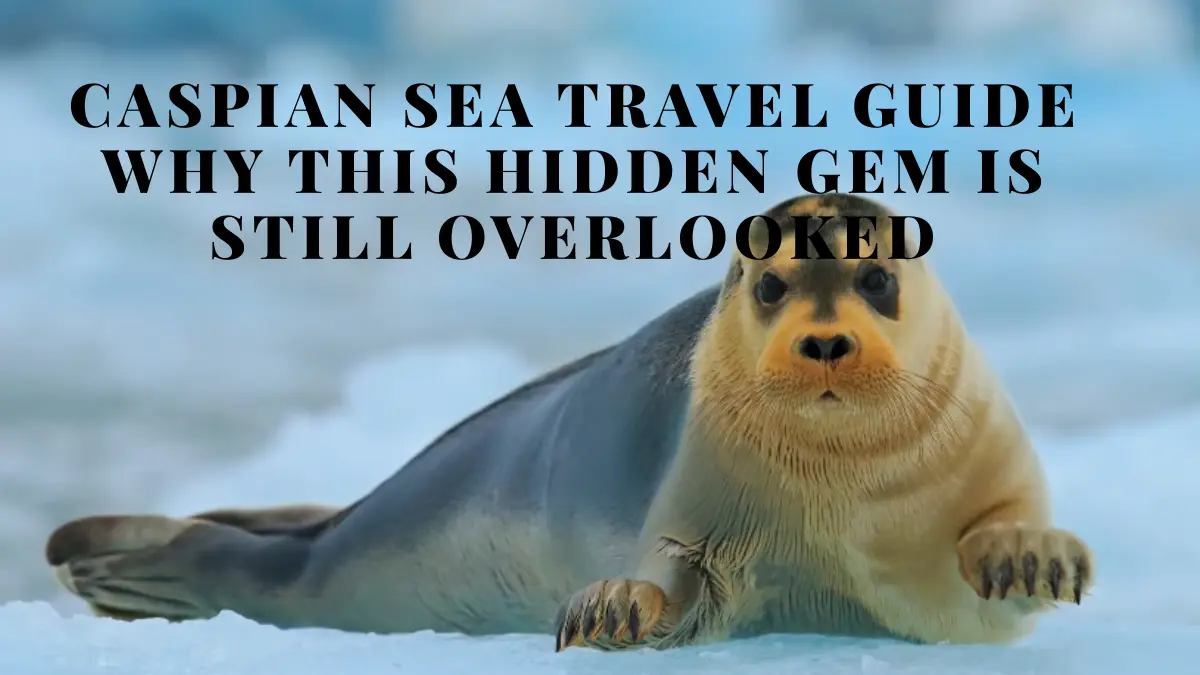
The host species that do not exist anywhere else. The most famous is probably the Caspian seal, one of only a few seal species in the world that live completely in inland waters. Birdlife is equally impressive, especially along migratory routes, where wetlands become seasonal refuges for thousands of birds.
Fish species, including several types of sturgeon, have defined life around the Caspian for eons, shaping local diets and traditions. Without seeing wildlife up close, travelers often feel its presence in quiet fishing villages, protected reserves, and stories passed down through generations.
Sunrises, Sunsets, and Landscapes Photographers Love
One reason why photographers are attracted to it is its light conditions. “Sun rises do come with a soft pastel glow, while the setting sun can be spectacular, spilling golden and dark orange shades over seemingly endless strips of shoreline.” Additionally, since “there is very little industrial development along most shorelines,” the scenery is unspoiled.
The Caspian Shore: Rachel Howard’s paintings are full of the drama of the landscape, from the minimalist desertscapes to the reflective wetlands and the misty edges of the forests. It is not a body of water that cries out for attention—it is a subject that requires waiting for.
Then there are the patterns of the, of
Life Along the Caspian Coast
Apart from the sights of the and the surrounding environment, the most prominent way it appears is through the daily lives of the people around it. When one thinks of the Caspian Sea’s influence on the surrounding environment, it is always there, yet it does not set the pace of a person’s daily activities. This does not affect the
Local Fishing Culture and Daily Routines
For many coastal communities, fishing is as much a way of life as it is an occupation. Small boats venture out early, often before any sunrise, returning with the day’s catch as the shoreline slowly wakes up. Nets are repaired by hand, boats are shared across generations, and knowledge of the water is passed down rather than written down.
These routines vary little from location to location, even across borders. The pace is unhurried from the northern fishing village to the southern port town. The Caspian teaches patience, and life on its coasts reflects that lesson.
Traditional Food Shaped by Sea and Land
Food along the Caspian coast is a story of balance. Of course, there’s seafood in many important mainstays, but it’s never without what the land offers: rice, herbs, vegetables, bread, and spices. Meals are often simple, seasonal, and deeply tied to local habits.
From smoked fish to grilled catches, from herb-filled dishes to rice-based meals, the variations are many, but a common logic presides: nothing is ever wasted, and flavours are cosily rounded rather than flamboyant. To eat here is always to eat personally and often homely, and with a deep awareness of place.
Markets, Music, and Slow Coastal Rhythms
“Local markets reflect the fabric of Caspian coastal communities. Fish, fruits, spices, and handicrafts line the stalls, and the conversations flow as freely as the business. Local markets give a glimpse into the collective lifestyle concerns of a community, including the sources of sustenance, the highs, and the seasons.”
Music and events can be found “naturally” as opposed to performance. “Folk songs, informal celebrations, evening walks by the shore” reflect “the rhythm of life.” You don’t want to be entertained. The Caspian coast is “inviting travelers to slow down and live the rhythm of the land with its people.”
Best Time to Visit the Caspian
The spans a range of climate zones, so it would seem that the “best” time to travel varies from place to place. The climate, in turn, varies from cool and damp, so traveling conditions differ markedly from place to place.
Seasonal Differences Across Countries
Spring and autumn represent the best periods for visiting the Caspian region. By that time, the climate will be mild, the scenery will be at its best, and the countries will be easily accessible.
The summers are warm throughout, but the experience is different. The north and west remain pleasant, and the south, close to Iran, can be warm and muggy. The winters, although cool, are less busy in the north with chances of snowfall, but the south is quite moderate with lush vegetation.
Due to its enormous size, routes around it can involve travel plans around a particular country, rather than around the whole body of water, as itineraries coincide with weather conditions.
Weather, Festivals, and Travel Costs
The climate affects both the atmosphere and the cost. The best summer months will include a hefty amount as the cost associated with it in major cities such as Baku. Spring festivals, conducted to exhibit culture, music, and traditions, provide a better option with a relaxed atmosphere and a low cost of travel.
Autumn is particularly attractive for those who like harmony—a comfortable climate, fewer crowds, and a quieter coastal zone. Winter is the lowest season in Caspian resorts, when the prices will be lowest, though the daylight will be shorter and the climate colder in the north.
When to Go for Nature, Cities, or Quiet Escapes
Nature and landscapes: The late spring and early autumn are the best times when it is dry enough to tramp around coastlines, wetlands, and countryside areas.
For city experiences: In the summer and early autumn, Caspian cities are extremely energetic, with open-air cafes, evening walks, and cultural events.
For quiet escapes: Late autumn and winter are ideal for travelers who seek solitude, slower rhythms, and a deeper connection to the local life.
There is no perfect time. Each season shows the region from yet another angle: vivid, contemplative, or simply beautiful.
What Makes Caspian Travel Different
The journey around does not have an orchestrated feel. In other words, there are no particular routes to take and no bucket list of sights to see. This makes the journey unique.
Fewer Crowds, More Authenticity
One of the first things visitors will notice is the lack of crowds. This is especially the case where the beach is concerned, and it is rare to find the shores of the crowded, no matter the size of the adjacent cities.
The absence of mass tourism makes it possible to observe everyday life. You’re not studying culture from the outside through the glass wall of tourism—you are right in the culture. Conversations seem authentic, traditions seem practiced, and experiences aren’t necessarily about performing for the tourist.
Cultural Contrasts Within Short Distances
The Caspian region offers dramatic cultural shifts without long travel times. In just a few hours, you can shift from modern urban centers to traditional villages, from European-style cafes to Asian-influenced markets, from desert landscapes to green coastal towns.
These contrasts are not contrived; they occur organically. Architecture changes, flavors of food change, and languages mix, often during the course of a day. Few regions offer such variety without crossing an ocean or a continent.
Why It Feels Untouched Compared to Mainstream Destinations
Its has remained remarkably unaffected by the forces that alter the popularity of holiday resorts. There are fewer resorts and fewer international chains, and a lot less emphasis on mass-market appeal.
Rather, it is still influenced by localized needs, geography, and history. It is this that gives it an untouched feel—not because it is unpopulated, but because it has resisted homogenization. For the kind of traveler who values complexity over convenience, exploration over recognition, the is an index of a rare thing: a place that remains itself.
Practical Travel Tips Most Guides Don’t Tell You
Is Sea Travel Safe?
The Caspian region is generally safe for travelers who follow local customs and basic travel precautions. Major cities such as Baku and Aktau have reliable infrastructure, while rural areas require more planning and cultural sensitivity.
Is the Caspian Expensive to Visit?
Travel costs vary widely by country. Azerbaijan and Kazakhstan are moderately priced, while Iran remains very affordable for budget travelers. Costs are significantly lower than in most European coastal destinations.
Internet, SIM Cards, and Connectivity
Major Caspian cities offer reliable mobile networks and affordable local SIM cards. Connectivity may be limited in rural coastal areas, so offline maps and translation apps are recommended.
While traveling around is fascinating, it’s not particularly easy. Because the region crosses numerous countries with different systems and expectations, being prepared for a few realities can make your experience smoother-and far more enjoyable.
Visas, Borders, and Regional Travel Realities
Among the most unexpected surprises that newcomers tend to experience when traveling in the Caspian region for the first time is that crossing borders in this area does not necessarily involve an easy coastline border crossing. Every country has its own set of rules in relation to visas.
Sea routes connecting countries are limited to transporting goods and locals, so international travelers would use air transport, train, and buses. Planners must plan their routes prior to travel and check the requirements for visa permits. There is more value placed on flexibility when traveling between countries.
Getting Around the Caspian Region
Within countries, the means of transportation are quite manageable. Large cities have taxis, ride-sharing services, and public transportation. Trains and buses connect smaller cities. Timetables may vary, but information may not be available in English.
Having local drivers available to transport you when going on day excursions or exploring rural areas may be more effective than using public transport. Also, walking and taking taxis may be the best means of transport when exploring the coastal areas, where there may be fewer people.
Safety, Language, and Local Etiquette
Generally, the Caspian region is safe to travel, at least for those showing respect for local customs. Take commonsense precautions: store valuables and travel documents in a safe place, do not display signs of wealth, and pay attention to local advice and warnings about sensitive areas and areas of conflict.
Language can be a challenge outside major cities. Learning a few basic phrases, using translation apps offline, and being patient can take you a long way. Generally, locals are helpful, even without much conversation going on.
Etiquette matters: modest dress in rural or traditional areas, polite behavior in markets, and respect for local norms are appreciated. Hospitality is strong across the region, but it’s often quiet and sincere rather than overt.
Is the Caspian Right for You?
Its is not a place that aims to please everybody. And this, in essence, is exactly its strength. Understanding whether it fits your style of travel will enable you to enjoy it for what it is, rather than what it is not.
Who Will Love This Destination (and Who Might Not)
You’ll probably find the area to your liking if you like to find out about destinations before the places become popular, if a lack of modern convenience and easy entertainment options doesn’t bother you, and if you have the curiosity to explore and learn about a different culture.
On the flip side, if your vision for travel includes all-inclusive resorts, predictable itineraries, or heavily touristed destinations, then they may present difficulties. Sometimes the quality of services is spotty, the quality of the infrastructure is uneven from country to country, and sometimes it requires a little effort.
Solo Travelers, Culture Lovers, and Slow Travelers
The region is very attractive for solitary travelers who can appreciate people-watching and spending their time at their own pace. Another category that may find this region highly attractive is people with interests in culture: history, cuisine, buildings, and geographic influences on people’s identities.
The slow traveler tends to relate to the region on an intimate level. Long walks by quiet shores, slow dining, mulling about over conversation, and lingering at markets or cafes can reveal as much as any checklist ever could.
Setting the Right Expectations
They will not blow you away with non-stop signature moments. It is a beauty that reveals itself slowly. There may be days when it all seems Continue Reading →
Go with expectations of contrast, not perfection; authenticity, not polish; discovery, not spectacle. When you travel with these expectations, it has the peculiar ability to leave an impression that stays with you long after you arrive home.
Why the Caspian Sea Won’t Stay Hidden Forever
Currently, it is still one of the mostunder-the-radar travel secrets around the globe. This is about to change. The is slowly entering the spotlight with increased worldwide curiosity about this destination.
Growing Tourism Interest
More and more travelers are now discovering the Caspian’s cities, landscapes, and cultural contrasts. Cities like Baku, Aktau, and Bandar-e Anzali report increasing numbers of foreign visitors, and tour operators are beginning to develop itineraries showcasing the sea’s diverse shores. As awareness brings opportunity, so too does the risk that the region will lose some of its untouched charm.
Changing Travel Trends Toward Lesser-Known Places
Contemporary travelers are becoming increasingly interested in experiences that can be deemed personal or authentic, as opposed to the commercialized ones that attract crowds. It perfectly matches this culture. The provides abundant culture, nature, and historical aspects without the commercialized tourism that most other destinations around the world boast. The quieter allure of the will attract much more attention as people are looking for something personal.
Why Now Is the Perfect Time to Visit
To visit the Caspian nowadays means to experience it before changes. One can walk along the lonely shores, see the life of rural fishing villages, and enjoy the serenity of the shores without meeting crowds. In ten years, things will surely have changed—and in a radical way. Yet now anyone who values curiosity, patience, and an open-minded approach will find plenty to enjoy.
“It’s always a reminder that the greatest experiences are often found in those destinations that aren’t quite as well-known around the world. However, for those willing to get off the travel beat, the memories and discoveries are things to remember long after the trip is over.”
Frequently Asked Questions About the Caspian Sea
Is the Caspian Sea a sea or a lake?
It is technically the world’s largest inland lake. However, due to its size, salinity, and wave patterns, it is traditionally referred to as a sea.
Where is the Caspian Sea?
The Caspian Sea is located between Europe and Asia. It is surrounded by Azerbaijan, Iran, Kazakhstan, Turkmenistan, and Russia.
Is it possible for tourists to visit the Caspian Sea
Yes, the Caspian Sea can be visited by tourists passing through the Caspian coastal countries, of which the easiest points of entry would be Azerbaijan and Kazakhstan.
In what country is the Caspian Sea a popular tourist destination?
First-time backpackers may want to consider Azerbaijan as their first destination because of the ease of visiting the country, the modern infrastructure available, and its attractions, such as the coastal line in Baku
This article is based on geographic research, regional travel reports, and publicly available tourism data from Caspian coastal countries.
About the Author
Amal Ghosal is a travel and culture writer specializing in lesser-known destinations across Europe and Asia. His work blends firsthand observation with geographic and tourism research to help readers understand places beyond mainstream travel routes.
2 thoughts on “Caspian Sea Travel Guide Why This Hidden Gem Is Still Overlooked”